Storm · 7 min read · Updated 2026-08-06
Roof Inspection After a Hail Storm: What to Do First
Most denied hail claims are denied on documentation, not on damage. Here is the order to do things in.
Do these five things, in this order
- Photograph the ground first. Hail on the lawn next to a ruler or a coin, dents in the car hood, shredded leaves under trees, damage to the deck rail. This is your proof of hail size and date, and it disappears within hours.
- Write down the date and time. Your claim will be matched against a storm report for that address. A date you are unsure of is a gift to an adjuster looking for a reason to deny.
- Check soft metals from the ground. Gutters, downspouts, roof vents, the AC condenser fins. Dents there mean the roof took the same hits.
- Get a free professional inspection within weeks. Not months. The longer the gap, the easier it is to attribute damage to a different storm or to age.
- Then call your insurer, with photos and a contractor report in hand.
What real hail damage looks like on a roof
You are looking for bruises, not holes.
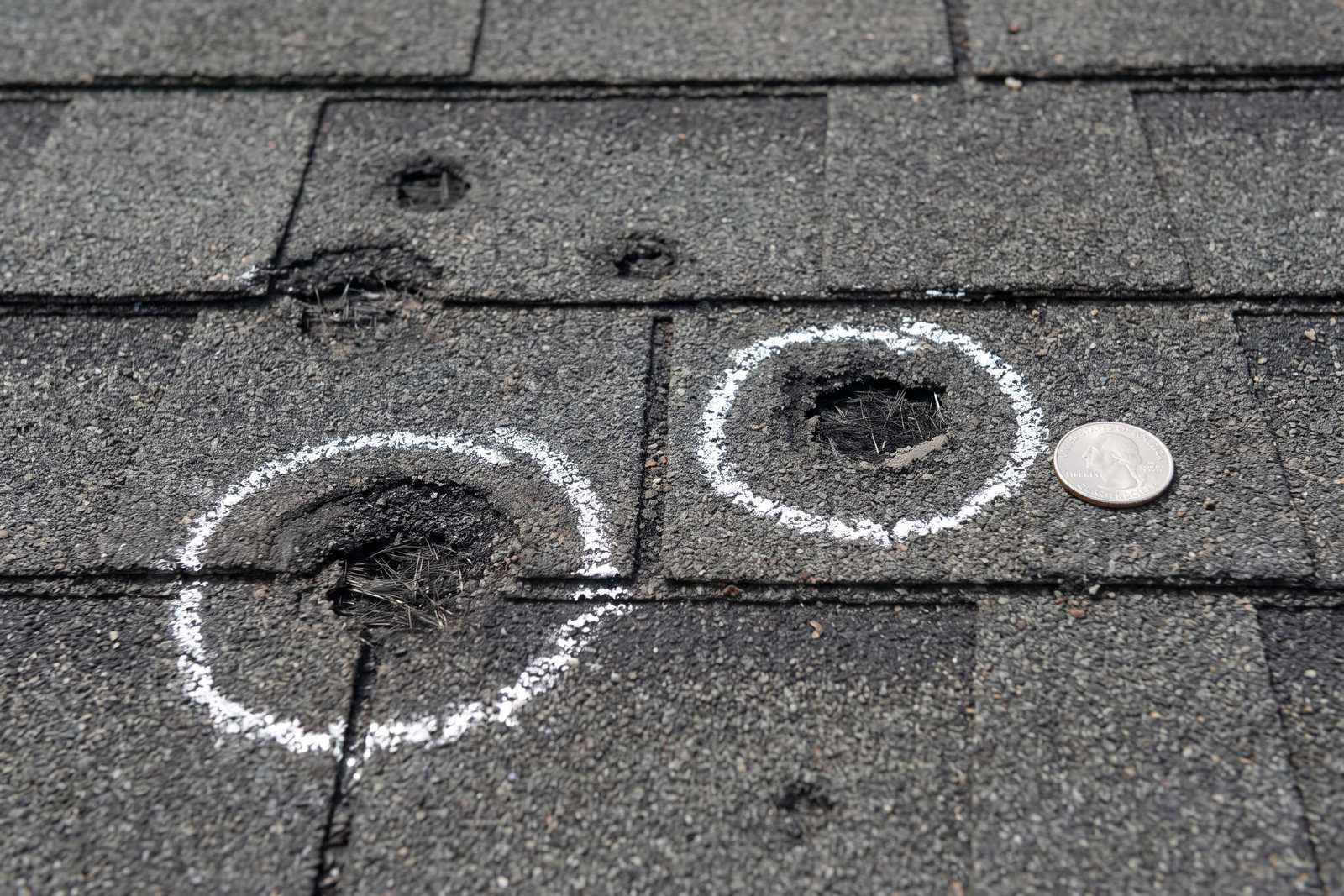
- Dark circular spots where granules have been knocked away and the black asphalt mat is exposed.
- A soft, spongy feel when you press the spot, which means the mat is fractured underneath even though the surface looks intact.
- Random distribution. Hail lands randomly. Wear and manufacturing defects appear in lines, patterns or along a single course. Adjusters look at pattern before anything else.
- Directional bias. Damage is usually worse on the slope facing the storm, often the north or west face here.
- Granules piled at downspout outlets.
What is not hail damage
- Blistering, which is round but has a raised or popped edge and comes from manufacturing or heat
- Normal granule loss spread evenly over an old roof
- Foot traffic scuffs, which follow a walking path
- Algae streaking, which is cosmetic and dark but has no impact point
Do not get on the roof yourself
Two reasons beyond the obvious. First, hail-struck shingles are already weakened, and walking on them creates damage that looks like foot traffic scuffing, which an adjuster will subtract from your claim. Second, wet or hail-strewn roofs are genuinely dangerous. Let someone insured for it do it.
How to document it properly
A useful inspection report contains:
- Dated, geotagged photos of each slope
- Close-ups with a chalk circle and a scale marker, usually a coin, at each strike
- A strike count within a marked 10 by 10 foot test square, which is the standard adjusters use
- Photos of soft metal damage: gutters, vents, AC fins
- Interior and attic photos if there is any water entry
- A third-party hail report confirming size and date at your address
Storm chasers
After a significant hail event, out-of-state crews arrive within days. Some are fine. The pattern to avoid is specific:
- Door knocking with an out-of-state plate and no local address
- Pressure to sign anything today, particularly an "authorization to inspect" that is actually a contingency contract assigning your claim
- Offering to cover or absorb your deductible, which is insurance fraud in North Dakota
- Wanting a large deposit before material is delivered
- No North Dakota contractor registration and no local references you can drive past
The test that filters almost all of them: ask for the address of their shop and the name of three customers in Ward County from more than two years ago.
If the claim is denied
Get the denial in writing with the stated reason. You can request a re-inspection with your contractor present, submit additional documentation, or invoke the appraisal clause in your policy, which appoints independent appraisers. A denial is an opening position, not a verdict.
Want someone to actually look at it?
Free inspection anywhere in Ward County. Photo report the same day, and we will tell you if the roof is fine. Call (380) 247-5157 or request online.
Questions we get asked
How soon should I get a roof inspection after hail?
Within a few weeks. Ground evidence like hail on the lawn and dents in soft metal disappears fast, and the longer you wait the easier it is for an adjuster to attribute damage to a different storm or to normal age.
What does hail damage look like on a shingle roof?
Dark circular bruises where granules have been knocked off exposing the black mat, often soft to the touch, distributed randomly rather than in lines. Dents in gutters, vents and AC fins confirm the roof took the same strikes.
Should I climb up and check my own roof after hail?
No. Hail-struck shingles are already weakened and walking on them creates scuffing that an adjuster may deduct from your claim. It is also genuinely dangerous. Get a free professional inspection instead.
Do I need an inspection before calling my insurance company?
It helps a great deal. Going in with dated photos, a strike count and a contractor condition report changes the conversation from your word against the adjuster's to a documented claim.
Related services
If you need this done
Storm & Hail Damage
North Dakota sits at the top of the hail belt and Ward County takes storms every season from May through Septe...
See details →Free Roof Inspection
A roof inspection should end with photos and a number, not a sales pitch. We walk the roof, check the attic fr...
See details →Roof Repair
A stain on the ceiling is almost never directly under the hole. Water travels along rafters and sheathing befo...
See details →Keep reading
More straight answers
How Long Does a Roof Last in North Dakota?
Manufacturers publish lifespans measured in a lab. Here is what each roofing material actually delivers on a house that sees 38 inches of snow and -40 degree cold snaps.
Read →CostsHow Much Does a New Roof Cost in North Dakota?
What a roof replacement actually costs in Minot and across North Dakota in 2026, and which line items are real versus which are padding.
Read →WinterIce Dam Removal and Prevention in North Dakota
An ice dam is an attic problem wearing a roof costume. Here is how to get the water stopped today and how to stop it happening again.
Read →MaterialsMetal Roof vs Shingles in a North Dakota Winter
The comparison most articles get wrong, because they are written for climates that never see 38 inches of snow or a -40 cold snap.
Read →MaterialsAre Class 4 Impact Resistant Shingles Worth It in Hail Country?
A Class 4 shingle costs about 15 to 25 percent more. In a hail state the insurance discount often covers it. Here is how to check whether it does for you.
Read →StormHow to File a Hail Damage Roof Insurance Claim
The claim process, the two policy types that decide what you actually receive, and what to do when the adjuster's scope comes back short.
Read →Roof Life9 Signs You Need a New Roof, Not Another Repair
Some of these you can see from the driveway. The two that matter most are inside your attic and in your gutters.
Read →ProcessHow Long Does It Take to Replace a Roof?
Most homes are a one or two day job. Here is what happens on each of those days, and the five things that add time.
Read →RepairHow to Find a Roof Leak (Before It Costs You a Ceiling)
Water travels along rafters before it drops. The wet spot on your ceiling is almost never directly below the entry point.
Read →ProcessWhen Is the Best Time to Replace a Roof in North Dakota?
Late spring and early fall give you the best install. Here is the month-by-month reality in a climate that hits both 95 F and -40 F.
Read →HiringHow to Choose a Roofing Contractor
The questions that filter out bad contractors are all things you can verify. None of them are about who seems nicest at the door.
Read →WinterRoof Snow Load: How Much Snow Can a Roof Hold?
Ward County builds to 35 psf. Here is how to work out what is actually sitting up there, and the signs that say get out of the house.
Read →StormActual Cash Value vs Replacement Cost on a Roof Claim
Two policies, same storm, same roof: one pays $18,000 and the other pays $7,000. The difference is one line on your declarations page.
Read →Get a free roof inspection this week
Photo report the same day. No obligation, and no pressure if the roof is fine.