Process · 6 min read · Updated 2026-08-24
How Long Does It Take to Replace a Roof?
Most homes are a one or two day job. Here is what happens on each of those days, and the five things that add time.
The short answer
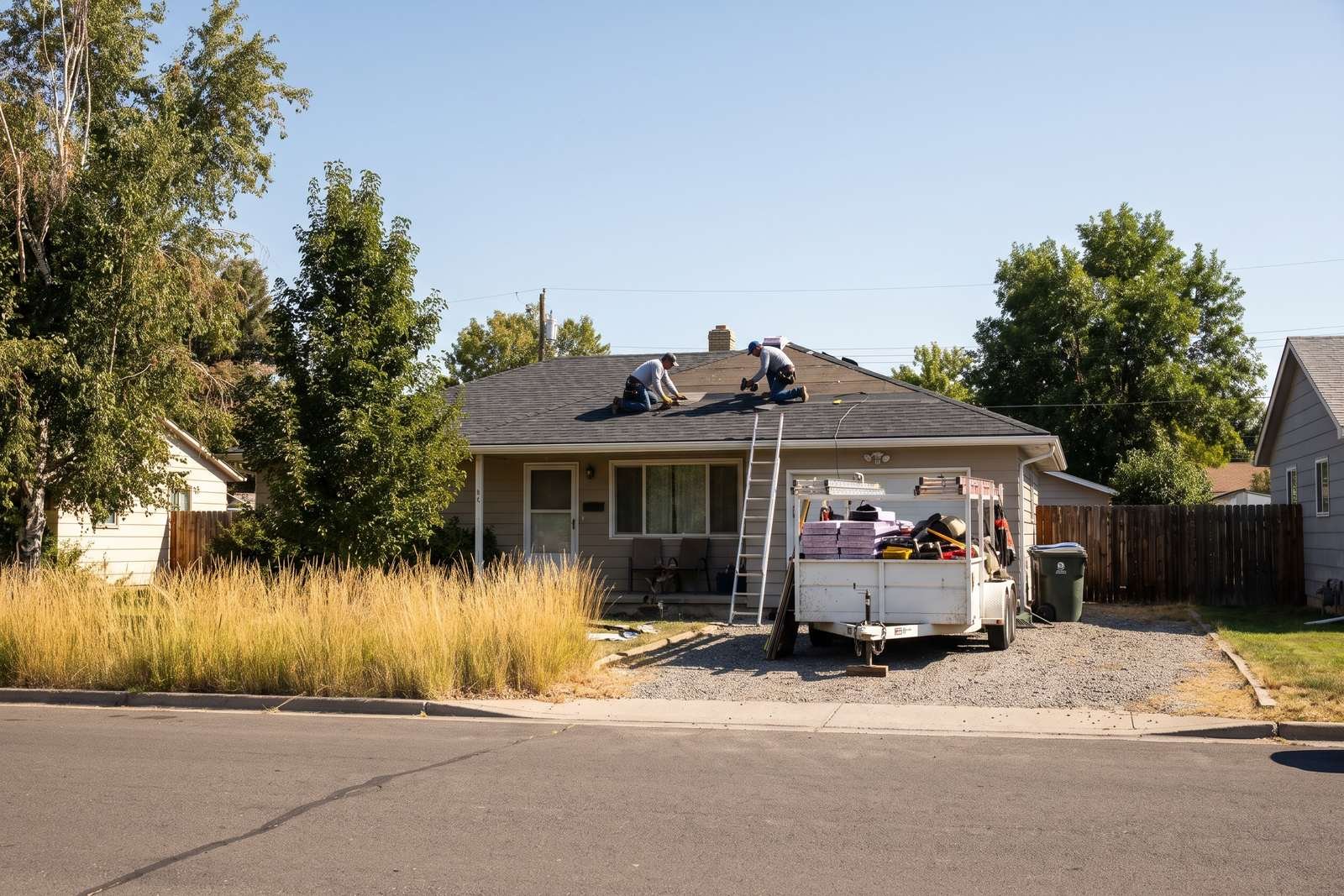
A typical single-family home in Minot, somewhere between 1,800 and 2,600 square feet of roof surface, takes one to two days for a full tear-off and replacement. A crew of five to seven starts around 7am and the house is watertight before they leave on day one, every time.
Larger, steeper or more cut-up roofs run three to four days. Standing seam metal runs three to five. A commercial low-slope system is a different animal and gets scheduled in sections.
What actually happens, hour by hour
Day one, 7:00am to 9:00am: setup and tear-off begins
Dump trailer positioned in the driveway. Tarps over landscaping, plywood against the siding where debris will land. Then tear-off starts at the far side of the roof and works back toward the trailer.
Day one, 9:00am to 1:00pm: tear-off and deck inspection
This is the loud part. Every existing layer comes off down to bare wood. As sections open up we walk the deck looking for soft spots, delamination and rot, usually around chimneys, valleys and anywhere a previous leak was patched instead of fixed. Anything bad gets photographed and you get a message before it is replaced.
Day one, 1:00pm to close: dry-in
Ice and water shield at the eaves, valleys and every penetration. Synthetic underlayment across the rest of the deck. Drip edge on. The house is now watertight. Even if a thunderstorm rolls in overnight, nothing gets in.
This is the single most important scheduling promise a roofer makes. Ask any contractor directly: will my house be dried in before you leave on the first day? If the answer is anything other than yes, keep looking.
Day two: shingles, flashing, ventilation, cleanup
Starter course at eaves and rakes, then field shingles up to the ridge. New pipe boots and step flashing, not reused. Ridge vent installed. Then cleanup: debris hauled, and a magnetic sweep over the entire yard, driveway and street for nails.
Five things that add days
| Factor | Time added | Why |
|---|---|---|
| A second or third existing layer | +half to one day | Double the tear-off labor and dump weight |
| Steep pitch, above 7/12 | +30 to 50% | Fall protection staging, crew moves slower |
| Extensive deck replacement | +half to one day | Cannot be known until the roof is open |
| Cut-up roof, many valleys and dormers | +one day | Custom flashing on every intersection |
| Weather | Varies | We do not tear off into rain, and asphalt needs hand-sealing below 40 F |
Swipe the table sideways to see every column.
What you need to do
- Clear the driveway so the dump trailer can get close. If it cannot, everything moves by hand and the job takes longer.
- Move vehicles off the street near the house.
- Take pictures off the walls in rooms directly under the roof. Vibration knocks frames down more often than people expect.
- Cover things in the attic, or at least anything you care about. Tear-off drops dust and old nail debris between the rafters.
- Plan for the dog. It is loud for eight hours.
You do not need to be home. Most of our customers go to work and come back to a finished roof.
Why the calendar wait is longer than the job
The work is two days. Getting on the schedule is usually two to six weeks in the summer, longer after a hail event when everyone in Ward County is calling at once. If you know your roof is coming due, get on a schedule in spring rather than reacting to a leak in October.
Emergencies do not wait for the queue. An active leak gets a tarp within a day.
Want someone to actually look at it?
Free inspection anywhere in Ward County. Photo report the same day, and we will tell you if the roof is fine. Call (380) 247-5157 or request online.
Questions we get asked
How long does it take to replace a roof on an average house?
One to two days for a typical 1,800 to 2,600 square foot roof with a crew of five to seven. Tear-off and dry-in both happen on day one, so the house is never left open overnight. Steep, cut-up or metal roofs run three to five days.
Will my house be exposed overnight during a roof replacement?
It should not be. A properly run job tears off and dries in the same day, meaning ice and water shield and underlayment go down before the crew leaves. Ask any contractor to confirm this before you sign.
Do I need to be home while my roof is replaced?
No. The crew needs driveway access for the dump trailer and an outdoor outlet. Most homeowners go to work and return to a finished roof.
How far in advance should I schedule a roof replacement?
Two to six weeks in a normal summer, and longer after a hail event when demand spikes across the region. If you know your roof is near the end of its life, book in spring rather than waiting for a leak.
Related services
If you need this done
Roof Replacement
If your roof is past twenty years or the last hailstorm finished it off, a full replacement costs less over ti...
See details →Free Roof Inspection
A roof inspection should end with photos and a number, not a sales pitch. We walk the roof, check the attic fr...
See details →Metal Roofing
Metal is the roof that makes the most sense in this climate and the least sense on a spreadsheet, which is why...
See details →Keep reading
More straight answers
How Long Does a Roof Last in North Dakota?
Manufacturers publish lifespans measured in a lab. Here is what each roofing material actually delivers on a house that sees 38 inches of snow and -40 degree cold snaps.
Read →CostsHow Much Does a New Roof Cost in North Dakota?
What a roof replacement actually costs in Minot and across North Dakota in 2026, and which line items are real versus which are padding.
Read →WinterIce Dam Removal and Prevention in North Dakota
An ice dam is an attic problem wearing a roof costume. Here is how to get the water stopped today and how to stop it happening again.
Read →MaterialsMetal Roof vs Shingles in a North Dakota Winter
The comparison most articles get wrong, because they are written for climates that never see 38 inches of snow or a -40 cold snap.
Read →MaterialsAre Class 4 Impact Resistant Shingles Worth It in Hail Country?
A Class 4 shingle costs about 15 to 25 percent more. In a hail state the insurance discount often covers it. Here is how to check whether it does for you.
Read →StormRoof Inspection After a Hail Storm: What to Do First
Most denied hail claims are denied on documentation, not on damage. Here is the order to do things in.
Read →StormHow to File a Hail Damage Roof Insurance Claim
The claim process, the two policy types that decide what you actually receive, and what to do when the adjuster's scope comes back short.
Read →Roof Life9 Signs You Need a New Roof, Not Another Repair
Some of these you can see from the driveway. The two that matter most are inside your attic and in your gutters.
Read →RepairHow to Find a Roof Leak (Before It Costs You a Ceiling)
Water travels along rafters before it drops. The wet spot on your ceiling is almost never directly below the entry point.
Read →ProcessWhen Is the Best Time to Replace a Roof in North Dakota?
Late spring and early fall give you the best install. Here is the month-by-month reality in a climate that hits both 95 F and -40 F.
Read →HiringHow to Choose a Roofing Contractor
The questions that filter out bad contractors are all things you can verify. None of them are about who seems nicest at the door.
Read →WinterRoof Snow Load: How Much Snow Can a Roof Hold?
Ward County builds to 35 psf. Here is how to work out what is actually sitting up there, and the signs that say get out of the house.
Read →StormActual Cash Value vs Replacement Cost on a Roof Claim
Two policies, same storm, same roof: one pays $18,000 and the other pays $7,000. The difference is one line on your declarations page.
Read →Get a free roof inspection this week
Photo report the same day. No obligation, and no pressure if the roof is fine.