Winter · 8 min read · Updated 2026-08-18
Ice Dam Removal and Prevention in North Dakota
An ice dam is an attic problem wearing a roof costume. Here is how to get the water stopped today and how to stop it happening again.
What an ice dam actually is
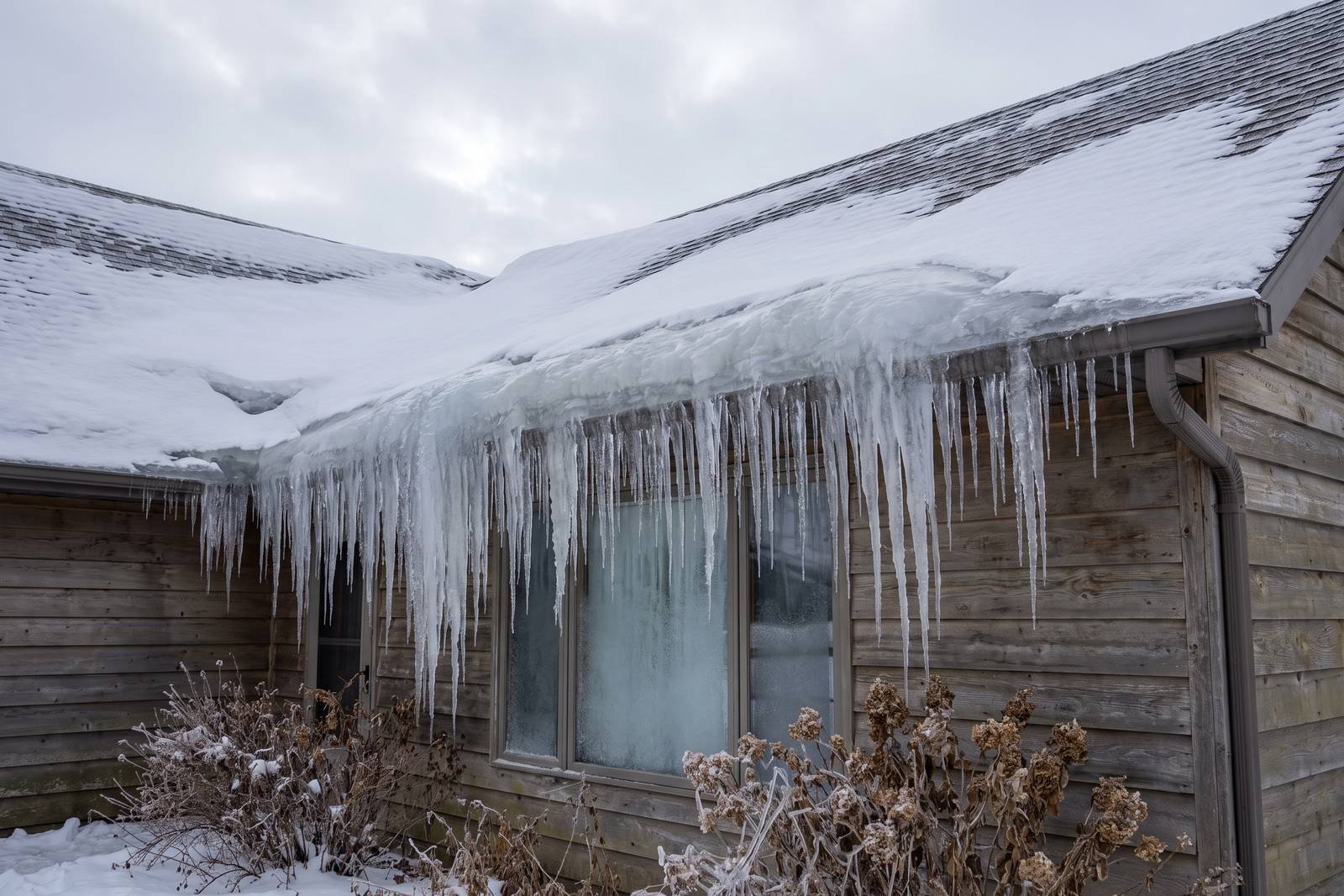
Heat leaks from your living space into the attic. That heat warms the roof deck and melts the underside of the snow pack. The meltwater runs down the roof until it reaches the overhang, which sits outside the heated envelope and is therefore cold. There it refreezes into a ridge of ice. Every subsequent bit of meltwater backs up behind that ridge, and standing water finds its way under the shingle course and into the house.
This matters: the ice dam is a symptom. The cause is heat in your attic. You can remove the ice every January for twenty years and never fix anything.
Stopping the water today
What works
- Steam. Low pressure steam melts a channel through the dam and lets the trapped water drain. It is the only method that does not damage the roof. This is what a professional crew uses.
- Calcium chloride in a sock. Fill a nylon stocking with calcium chloride ice melt, lay it vertically across the dam so it melts a drainage channel. Slow, but it is safe and you can do it yourself from a ladder.
- Clearing the lower three or four feet of snow with a roof rake from the ground. Removes the fuel before it melts. Do this after every heavy snowfall and most dams never form.
What damages your roof
- Chipping with a hammer, axe or chisel. Cold shingles are brittle. You will crack the mat and turn a water problem into a replacement.
- Pressure washing. Drives water under the shingles, which is the exact thing you are trying to stop.
- Rock salt. Sodium chloride corrodes metal flashing, gutters and fasteners, and kills the landscaping it drips onto. Calcium chloride is the correct product.
- Going up on an iced roof. Not worth it. People die doing this every winter.
The permanent fix, in priority order
1. Air sealing the attic floor
This is the highest-return item and the one that gets skipped. Warm air rises through every penetration in your ceiling: recessed lights, bath fans, plumbing stacks, the attic hatch, top plates, wiring holes. Sealing those with foam and caulk stops the heat before it reaches the deck. Insulation alone does not do this, because air leaks straight through insulation.
2. Insulation depth
North Dakota attics should be at R-49 to R-60. Many older Minot homes are at R-19 to R-30. Adding depth after air sealing keeps the remaining heat where you paid for it.
3. Balanced ventilation
The roof deck needs to stay at outdoor temperature. That takes intake at the soffit and exhaust at the ridge, roughly balanced. The failure we find constantly: a good ridge vent with soffit intake blocked by blown-in insulation. Baffles at each rafter bay fix it, and it is cheap work.
4. Heat cable, last
Heat cable in a zigzag at the eave keeps a drainage channel open. It is a legitimate tool on a problem eave that cannot be fixed structurally, such as a cathedral ceiling with no attic to seal. It is not a fix, it is a bypass, and it costs money to run all winter.
If water already got in
- Photograph everything before you clean up, for your insurer.
- Get the ice channel opened so water stops accumulating.
- Pull wet insulation. Wet insulation has no R-value and will grow mold.
- Call your insurer. Sudden water damage from an ice dam is usually covered. Long-term seepage from a known problem usually is not, which is another reason to act fast.
Why some houses get them and the neighbor does not
Same street, same weather, one roof has a foot of ice and the other is clear. The difference is almost always attic air sealing and intake ventilation. Occasionally it is a complex roof geometry that traps snow in a valley, or a low-slope eave over an unheated porch. It is essentially never the shingle brand.
Want someone to actually look at it?
Free inspection anywhere in Ward County. Photo report the same day, and we will tell you if the roof is fine. Call (380) 247-5157 or request online.
Questions we get asked
How do you remove an ice dam without damaging the roof?
Low pressure steam is the only method that reliably melts the dam without harming shingles. Calcium chloride in a nylon sock laid across the dam is a safe do-it-yourself option that melts a drainage channel. Never chip at ice with a hammer or axe, and never use a pressure washer.
Will heat cable stop ice dams?
It keeps a drainage channel open so water does not back up, which prevents the leak. It does not stop the dam forming and it does not address the heat loss causing it. Treat it as a bypass for eaves that cannot be fixed structurally, not as the solution.
Does homeowners insurance cover ice dam damage?
Sudden interior water damage from an ice dam is typically covered. Gradual damage from a problem you knew about and left is typically not. Document with photos and report it promptly.
What is the actual permanent fix for ice dams?
Air seal every penetration in the attic floor, bring insulation up to R-49 or better, and restore balanced soffit intake and ridge exhaust ventilation. In that order. Air sealing gives the biggest result and is the step most often skipped.
Related services
If you need this done
Roof Repair
A stain on the ceiling is almost never directly under the hole. Water travels along rafters and sheathing befo...
See details →Seamless Gutters
Gutter installation near me in Minot is not a summer rain problem, it is a spring melt problem. Thirty-eight i...
See details →Free Roof Inspection
A roof inspection should end with photos and a number, not a sales pitch. We walk the roof, check the attic fr...
See details →Keep reading
More straight answers
How Long Does a Roof Last in North Dakota?
Manufacturers publish lifespans measured in a lab. Here is what each roofing material actually delivers on a house that sees 38 inches of snow and -40 degree cold snaps.
Read →CostsHow Much Does a New Roof Cost in North Dakota?
What a roof replacement actually costs in Minot and across North Dakota in 2026, and which line items are real versus which are padding.
Read →MaterialsMetal Roof vs Shingles in a North Dakota Winter
The comparison most articles get wrong, because they are written for climates that never see 38 inches of snow or a -40 cold snap.
Read →MaterialsAre Class 4 Impact Resistant Shingles Worth It in Hail Country?
A Class 4 shingle costs about 15 to 25 percent more. In a hail state the insurance discount often covers it. Here is how to check whether it does for you.
Read →StormRoof Inspection After a Hail Storm: What to Do First
Most denied hail claims are denied on documentation, not on damage. Here is the order to do things in.
Read →StormHow to File a Hail Damage Roof Insurance Claim
The claim process, the two policy types that decide what you actually receive, and what to do when the adjuster's scope comes back short.
Read →Roof Life9 Signs You Need a New Roof, Not Another Repair
Some of these you can see from the driveway. The two that matter most are inside your attic and in your gutters.
Read →ProcessHow Long Does It Take to Replace a Roof?
Most homes are a one or two day job. Here is what happens on each of those days, and the five things that add time.
Read →RepairHow to Find a Roof Leak (Before It Costs You a Ceiling)
Water travels along rafters before it drops. The wet spot on your ceiling is almost never directly below the entry point.
Read →ProcessWhen Is the Best Time to Replace a Roof in North Dakota?
Late spring and early fall give you the best install. Here is the month-by-month reality in a climate that hits both 95 F and -40 F.
Read →HiringHow to Choose a Roofing Contractor
The questions that filter out bad contractors are all things you can verify. None of them are about who seems nicest at the door.
Read →WinterRoof Snow Load: How Much Snow Can a Roof Hold?
Ward County builds to 35 psf. Here is how to work out what is actually sitting up there, and the signs that say get out of the house.
Read →StormActual Cash Value vs Replacement Cost on a Roof Claim
Two policies, same storm, same roof: one pays $18,000 and the other pays $7,000. The difference is one line on your declarations page.
Read →Get a free roof inspection this week
Photo report the same day. No obligation, and no pressure if the roof is fine.