Winter · 7 min read · Published 2026-10-01
Fall Roof Checklist Before a Minot Winter
October is the last easy window to fix a roof in Minot. Here is what to check before the snow sticks.
To prepare your roof for a Minot winter, check the shingles and flashing for damage, clean the gutters and downspouts, clear the attic soffits, and seal air leaks into the attic. Do it in October, while days are still warm enough for shingles to seal and before snow hides the problems. Anything that leaks a little in fall will leak a lot under a snow pack.
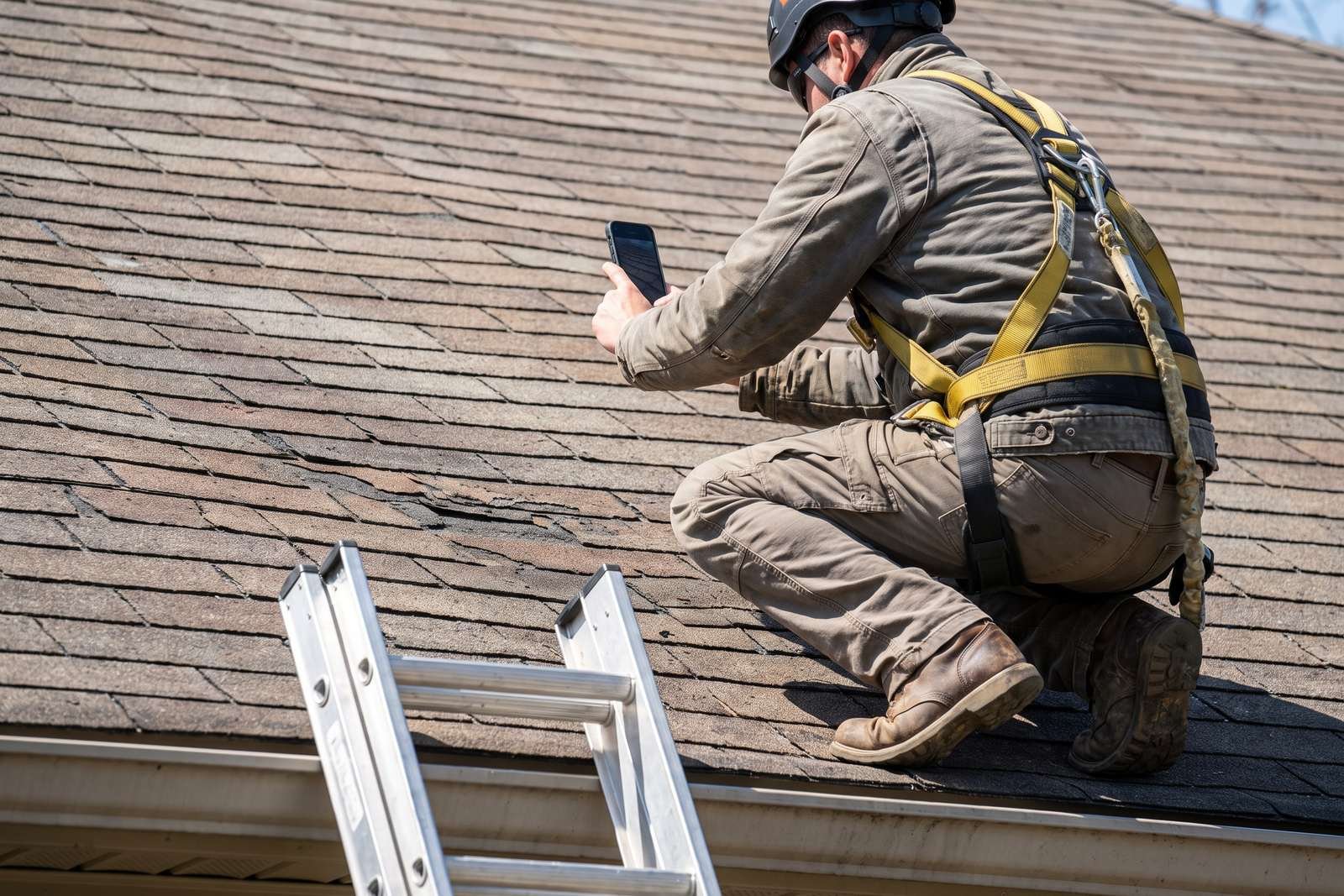
Winter in Ward County is hard on a roof. It sits under snow for months, it freezes and thaws, and it takes wind off the open prairie. A small loose shingle in October can turn into a wet ceiling in February. This checklist covers what to look at, what you can do yourself, and what to leave to a roofer.
Why October is the deadline
Asphalt shingles need temperatures above about 40 F to seal down properly. The self-seal strip on each shingle softens in the sun and bonds to the shingle below. Once our days stay colder than that, new shingles and repairs do not seal on their own. They can lift in the wind until spring.
That makes fall the best time for repairs. It is also when a roofer can actually see the roof. After the first lasting snow, missing shingles, loose flashing and hail bruises are buried until April.
A few other reasons fall makes sense:
- Hail season runs May to September, so any summer storm damage should be found now
- Gutters are full of leaves and seeds after the trees drop
- Attic problems are easier to fix before it is cold enough to frost
- Roofers book up fast once the first storm hits
Your fall roof checklist
Here is the full list in one place. Most items take a few minutes from the ground or the attic hatch.
| Item | What to look for | Who should do it |
|---|---|---|
| Shingles | Missing, cracked, curled or lifted shingles, bare spots with no granules | Look from the ground; repairs by a roofer |
| Hail damage | Dents in vents, gutters and downspouts, dark spots on shingles | Roofer inspection |
| Flashing | Loose or rusted metal at chimneys, walls and valleys | Roofer |
| Pipe boots | Cracked rubber collars around plumbing vents | Roofer |
| Gutters | Leaves, seeds, sagging runs, loose hangers | Homeowner from a ladder, or a pro |
| Downspouts | Clogs, missing extensions, water near the foundation | Homeowner |
| Attic | Blocked soffits, wet spots, daylight around pipes | Homeowner look; fixes by a pro |
| Trees | Branches touching or hanging over the roof | Homeowner or tree service |
| Roof rake | Have one ready before the first big snow | Homeowner |
Check shingles and flashing from the ground
You do not need to climb up to learn a lot. Walk around the house with a pair of binoculars on a bright afternoon. Look at each slope.
Signs of shingle trouble
- Shingles that are missing, creased or flipped up at the corners
- Curling edges or cupped shingles
- Dark patches where the granules are gone
- Piles of granules at the bottom of the downspouts
- Rows that look wavy or uneven
If several of these show up at once, the roof may be near the end. Our list of signs a roof needs replacing will help you decide if a repair still makes sense.
Do not skip a hail check
Hail damage is easy to miss from the ground. Look at the soft metal first: roof vents, gutters, downspouts and window wraps. Fresh dents there mean the shingles took hits too. Hail bruises crack the mat under the granules, and water gets in when that spot freezes and thaws all winter. If a summer storm went through your part of town, have the roof looked at before snow covers the evidence.
Flashing and pipe boots
Flashing is the metal that seals the roof where it meets a chimney, a wall or a valley. Pipe boots are the rubber collars around plumbing vents. Both are top leak spots in winter. Rubber boots crack after years of sun, and the gap lets meltwater run straight down the pipe. A boot is a small, cheap repair in October. It is a stained ceiling in March.
Clean the gutters and downspouts
Gutters full of leaves hold water. That water freezes into a solid block of ice at the eave. The ice adds weight to the gutter and gives an ice dam a head start. Once the gutter is frozen solid, meltwater has nowhere to go.
- Scoop out leaves, seeds and shingle grit after the trees are bare
- Flush each downspout with a hose and make sure water comes out the bottom
- Check that the gutters slope toward the downspouts
- Tighten loose hangers so the gutter can hold snow and ice weight
- Put the downspout extensions back on so meltwater runs away from the foundation
Use a sturdy ladder on firm ground and have someone hold it. If you are not comfortable up high, this is a good job to hand off.
Look in the attic before it gets cold
The attic is where most winter roof problems actually start. Heat leaking up from the house melts the snow on the roof, and the water refreezes at the cold eaves. That is how ice dams form. NDSU Extension engineers say the key to stopping them is enough attic insulation and ventilation to keep the roof near the outdoor temperature. Their release on reducing ice dam damage also lists common heat leaks: plumbing, wiring, recessed lights and the attic hatch.
With a flashlight from the hatch, check for:
- Insulation pushed into the soffits so no air can come in at the eaves
- Water stains or dark spots on the underside of the roof deck
- Rusty nail tips, a sign of frost in past winters
- A bath fan duct that ends in the attic instead of outside
- Gaps around pipes, wires and light fixtures
ENERGY STAR has a guide to sealing attic air leaks that shows common leak spots. It also says a history of ice dams is a reason to get a pro to look before doing it yourself.
Plan for snow and ice
Minot averages about 38 inches of snow a year, and Ward County roofs are built to a 35 psf ground snow load. Most roofs handle that fine. Trouble comes from drifting, wet snow and ice at the eaves. Before winter:
- Buy a roof rake. Pulling the bottom few feet of snow off from the ground helps stop ice dams.
- Know where your power lines are before you use a long aluminum rake.
- Never plan to climb on a snowy roof. Rake from the ground or call someone.
- Trim branches that hang over the roof. Heavy snow and ice can bring them down.
For more on how much weight is too much, read our guide to roof snow load limits. Keep an eye on the forecast from the National Weather Service in Bismarck, which posts winter storm watches and warnings for our area. A big storm coming is a good reason to rake the eaves early.
When to call a roofer this fall
Some jobs are easy for a homeowner. Others are not worth the risk. Call a roofer if you see:
- Missing or lifted shingles
- Hail dents on vents, gutters or the siding from this summer
- Loose flashing or cracked pipe boots
- Stains on the ceiling or the roof deck
- Soft spots or sagging lines on the roof
Fall repairs go on while shingles can still seal. A single point repair usually runs $350 to $1,400 in Minot. If the roof needs more than that, you will at least know before snow covers it.
Getting a Minot roof inspected before the snow
If you would rather not guess, book a fall roof inspection in Minot. It takes about 45 minutes and you get a photo report the same day. We check the shingles, flashing, pipe boots and gutters, and we look at the attic intake ventilation too. If the roof is fine, we will tell you that.
If you are thinking about a replacement in spring, run your numbers in our roof cost calculator first. Then call (380) 247-5157. We work Monday to Friday 7am to 6pm and Saturday 8am to 2pm, and storm calls are answered 24/7.
Want someone to actually look at it?
Free inspection anywhere in Ward County. Photo report the same day, and we will tell you if the roof is fine. Call (380) 247-5157 or request online.
Questions we get asked
When should I get my roof ready for winter in Minot?
Aim for September and October. Shingles need temperatures above about 40 F to seal, so repairs done in fall hold better than repairs done in deep winter. It is also easier to find damage before snow covers the roof.
Can I get a roof repaired in November?
Often yes, on a dry day. New shingles will not seal on their own in the cold, so they may need hand sealing and can lift in wind until spring. The earlier in fall, the better.
Do I really need to clean my gutters before winter?
Yes. Gutters full of leaves hold water that freezes solid at the eave. That ice adds weight and gives ice dams a head start, and meltwater has nowhere to drain.
What is the most important thing to check before winter?
Look for missing shingles, cracked pipe boots and loose flashing, since those are the common winter leak spots. Then check the attic for blocked soffits and air leaks, because a warm attic is what causes ice dams.
Related services
If you need this done
Free Roof Inspection
A roof inspection should end with photos and a number, not a sales pitch. We walk the roof, check the attic fr...
See details →Commercial Roofing
Commercial roofing in Minot, ND means low-slope membranes carrying a 35 psf snow load and drains that have to ...
See details →Metal Roofing
Metal is the roof that makes the most sense in this climate and the least sense on a spreadsheet, which is why...
See details →Keep reading
More straight answers
How Long Does a Roof Last in North Dakota?
Manufacturers publish lifespans measured in a lab. Here is what each roofing material actually delivers on a house that sees 38 inches of snow and -40 degree cold snaps.
Read →CostsHow Much Does a New Roof Cost in North Dakota?
What a roof replacement actually costs in Minot and across North Dakota in 2026, and which line items are real versus which are padding.
Read →WinterIce Dam Removal and Prevention in North Dakota
An ice dam is an attic problem wearing a roof costume. Here is how to get the water stopped today and how to stop it happening again.
Read →MaterialsMetal Roof vs Shingles in a North Dakota Winter
The comparison most articles get wrong, because they are written for climates that never see 38 inches of snow or a -40 cold snap.
Read →MaterialsAre Class 4 Impact Resistant Shingles Worth It in Hail Country?
A Class 4 shingle costs about 15 to 25 percent more. In a hail state the insurance discount often covers it. Here is how to check whether it does for you.
Read →StormRoof Inspection After a Hail Storm: What to Do First
Most denied hail claims are denied on documentation, not on damage. Here is the order to do things in.
Read →StormHow to File a Hail Damage Roof Insurance Claim
The claim process, the two policy types that decide what you actually receive, and what to do when the adjuster's scope comes back short.
Read →Roof Life9 Signs You Need a New Roof, Not Another Repair
Some of these you can see from the driveway. The two that matter most are inside your attic and in your gutters.
Read →ProcessHow Long Does It Take to Replace a Roof?
Most homes are a one or two day job. Here is what happens on each of those days, and the five things that add time.
Read →RepairHow to Find a Roof Leak (Before It Costs You a Ceiling)
Water travels along rafters before it drops. The wet spot on your ceiling is almost never directly below the entry point.
Read →ProcessWhen Is the Best Time to Replace a Roof in North Dakota?
Late spring and early fall give you the best install. Here is the month-by-month reality in a climate that hits both 95 F and -40 F.
Read →HiringHow to Choose a Roofing Contractor
The questions that filter out bad contractors are all things you can verify. None of them are about who seems nicest at the door.
Read →StormActual Cash Value vs Replacement Cost on a Roof Claim
Two policies, same storm, same roof: one pays $18,000 and the other pays $7,000. The difference is one line on your declarations page.
Read →Get a free roof inspection this week
Photo report the same day. No obligation, and no pressure if the roof is fine.