Repair · 7 min read · Published 2026-11-05
Roof Leaking in Winter? What to Do in North Dakota
Water dripping from the ceiling in January is scary. Here is what to do in the first hour, and what can wait for a warmer day.
If your roof leaks in winter, catch the water, protect what is below it, and stay off the roof. Then figure out whether it is an ice dam backing water up at the eaves or a true roof leak, and call a roofer. Many winter leaks can be stopped with a temporary fix now and repaired properly on the next warmer, dry day.
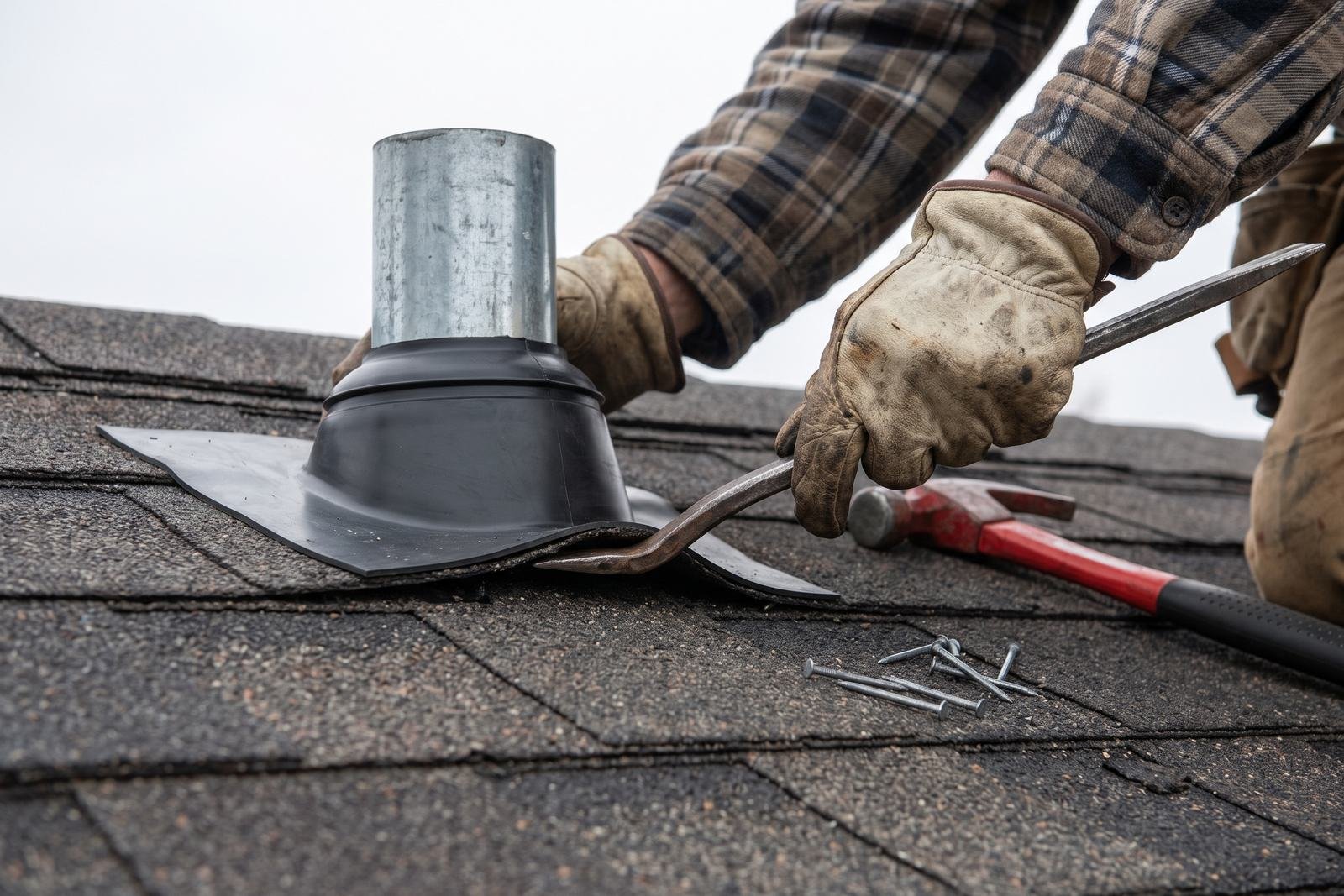
A North Dakota winter leak often shows up at the worst time: a thaw after a big snow, or a sunny day in February when the snow on the roof starts to melt. The water has been sitting up there for weeks. Here is what to do, in order.
The first hour: emergency steps
- Catch the water. Put buckets, pans or towels under every drip. Move furniture, rugs and electronics out of the way.
- Watch for ceiling bulges. If water is pooling above drywall and the ceiling is sagging, poke a small hole at the low point with a screwdriver and let it drain into a bucket. This controls the water and can save the whole ceiling from coming down.
- Turn off power to wet fixtures. If water is coming through a light or near an outlet, shut that circuit off at the breaker panel.
- Take photos. Get the stain, the drip, the attic if you can see it safely, and the outside eaves. Note the date and time.
- Look outside from the ground. Check for thick ice along the eaves, big icicles, or snow piled against a wall or in a valley.
- Call a roofer. Tell them where the water is showing up and what the eaves look like.
Do not climb onto a snowy or icy roof. You cannot see what is under you, and a fall from a roof edge onto frozen ground is a much bigger problem than a wet ceiling.
Ice dam leak or a real roof leak?
Most winter leaks in Minot fall into one of two groups. Knowing which one you have changes the fix.
| Clue | Likely an ice dam | Likely a roof or flashing leak |
|---|---|---|
| Where the water shows | Along an outside wall, near the top of the wall or ceiling edge | Middle of a room, around a chimney, vent pipe or skylight |
| When it leaks | On sunny days or during a thaw, after snow has sat a while | Any time water runs, including rain in fall and spring |
| What you see outside | A thick ridge of ice and big icicles at the eaves | Missing shingles, loose flashing, a cracked pipe boot |
| Leaked before? | Only in winter | Also in rain, or after hail or wind |
| Attic sign | Wet insulation right at the eaves | Wet spot or drip line under one area of the deck |
There is a third cause people miss: frost in the attic. Warm, damp house air leaks up, freezes on the nails and roof deck, then melts all at once on a warm day. It can look like a roof leak but happens all over the attic at once. If you need help narrowing it down, our guide on finding a roof leak walks through the steps.
Why ice dams cause leaks
Heat from the house melts snow on the upper roof. The water runs down to the cold overhang and freezes. The ice ridge grows, and meltwater backs up behind it and under the shingles. Shingles shed water running down, not water pushed back up. NDSU Extension engineers say the key is enough attic insulation and ventilation to keep the roof near the outdoor temperature, and they recommend a roof rake from the ground instead of climbing up. Their release on reducing ice dam damage covers the basics.
What you can safely do from the ground
- Rake the bottom few feet of snow. A roof rake from the ground takes away the snow that feeds the ice dam. Leave a couple of inches so you do not scrape the shingles.
- Look up before you rake. Long aluminum rakes and power lines do not mix.
- Clear the downspouts at ground level so meltwater has somewhere to go.
- Do not chip the ice with a hammer, axe or shovel. Cold shingles are brittle and break easily.
- Do not use a ladder on ice. If the base is not on solid, clear ground, skip it.
For a deeper look at taking ice off safely, read our post on ice dam removal in Minot.
The limits of tarping in winter
In summer, a blue tarp is the standard emergency fix. In a North Dakota winter it often does not work well, and sometimes it is not safe to try.
- A tarp has to be fastened to a clear roof. Under snow and ice, there is nothing solid to fasten to.
- Prairie wind gets under a loose tarp and tears it, or the tarp pulls off shingles with it.
- A tarp laid over an ice dam does not stop water already backing up under the shingles.
- Getting a crew onto an icy roof safely takes time and the right gear.
So in winter, the first fix is often something else. That can be raking and steaming the ice at the eaves to open a drain path, sealing a flashing or pipe boot from a clear patch, or working from inside the attic to catch and redirect water. The goal is to stop the water now and fix the cause when the roof is safe to work on.
Can a roof be repaired in cold weather?
Yes, with some limits. Asphalt shingles need temperatures above about 40 F to seal down on their own. In colder weather, replacement shingles get hand-sealed so they hold until spring warms them up. Some repairs are fine in the cold:
- Replacing a cracked pipe boot
- Resealing or replacing loose flashing
- Swapping a few blown-off shingles
- Fixing gutters pulled loose by ice
Bigger work, like replacing a section of decking or a full tear-off, is best planned for a dry stretch with warmer days. The National Weather Service in Bismarck forecast helps us pick those windows. A single point repair usually runs $350 to $1,400 in Minot. If the roof keeps leaking in more than one place, read up on winter roof repair options before deciding what to do.
Drying out after the leak
Stopping the water is half the job. Wet building materials grow mold if they stay wet. The EPA says to dry water-damaged areas and items within 24 to 48 hours to prevent mold growth. Its brief guide to mold and moisture also notes that roof leaks are a common hidden source.
- Pull wet insulation out of the attic if it is soaked and matted
- Run fans and a dehumidifier in the room below
- Cut out ceiling drywall that is soft or sagging
- Check the attic again after the next warm day
Insurance and winter roof leaks
Coverage depends on your policy and the cause of the leak. Damage from a sudden event is handled differently than slow wear. Either way, your insurer will want photos and a record of what you did to stop more damage, so keep receipts for buckets, fans and any emergency work. If hail or wind caused the leak, our guide to a hail damage insurance claim explains the steps.
Getting a winter roof leak fixed in Minot
Storm calls are answered 24/7. Call (380) 247-5157 and tell us where the water is coming in and what the eaves look like. We will tell you what can be done safely now and what should wait for a better day. When it is safe to get up there, we give you a photo report and a written line-item quote before any permanent repair.
If the leak has stopped and you want the roof looked at before the next thaw, you can book a free inspection online. It takes about 45 minutes, and you get a photo report the same day. We check the shingles, flashing and pipe boots, and we look at the attic intake ventilation, since a warm attic is behind most ice dam leaks. If the roof is in good shape, we will tell you so. If it is near the end, you will have time to plan a replacement for spring instead of fighting the same leak every winter.
Want someone to actually look at it?
Free inspection anywhere in Ward County. Photo report the same day, and we will tell you if the roof is fine. Call (380) 247-5157 or request online.
Questions we get asked
What should I do first if my roof leaks in winter?
Catch the water with buckets and towels, move belongings, and turn off power to any wet light fixtures. Take photos, look at the eaves from the ground for ice, and call a roofer. Do not climb onto a snowy or icy roof.
How do I know if it is an ice dam or a roof leak?
Ice dam leaks usually show up along outside walls during a thaw or on sunny days, with thick ice at the eaves. Leaks in the middle of a room or around a chimney or vent pipe point to flashing or shingle damage. Frost melting in the attic is a third common cause.
Can a roof be repaired in winter in North Dakota?
Yes, many repairs can be done on a dry day. Shingles need temperatures above about 40 F to seal on their own, so cold weather repairs are hand-sealed. Bigger jobs are best planned for a warmer, dry stretch.
Will a tarp stop a winter roof leak?
Not always. A tarp needs a clear roof to fasten to, wind can tear it off, and it does not stop water already backing up behind an ice dam. In winter the first step is often clearing ice at the eaves or sealing the leak point.
Related services
If you need this done
Free Roof Inspection
A roof inspection should end with photos and a number, not a sales pitch. We walk the roof, check the attic fr...
See details →Commercial Roofing
Commercial roofing in Minot, ND means low-slope membranes carrying a 35 psf snow load and drains that have to ...
See details →Metal Roofing
Metal is the roof that makes the most sense in this climate and the least sense on a spreadsheet, which is why...
See details →Keep reading
More straight answers
How Long Does a Roof Last in North Dakota?
Manufacturers publish lifespans measured in a lab. Here is what each roofing material actually delivers on a house that sees 38 inches of snow and -40 degree cold snaps.
Read →CostsHow Much Does a New Roof Cost in North Dakota?
What a roof replacement actually costs in Minot and across North Dakota in 2026, and which line items are real versus which are padding.
Read →WinterIce Dam Removal and Prevention in North Dakota
An ice dam is an attic problem wearing a roof costume. Here is how to get the water stopped today and how to stop it happening again.
Read →MaterialsMetal Roof vs Shingles in a North Dakota Winter
The comparison most articles get wrong, because they are written for climates that never see 38 inches of snow or a -40 cold snap.
Read →MaterialsAre Class 4 Impact Resistant Shingles Worth It in Hail Country?
A Class 4 shingle costs about 15 to 25 percent more. In a hail state the insurance discount often covers it. Here is how to check whether it does for you.
Read →StormRoof Inspection After a Hail Storm: What to Do First
Most denied hail claims are denied on documentation, not on damage. Here is the order to do things in.
Read →StormHow to File a Hail Damage Roof Insurance Claim
The claim process, the two policy types that decide what you actually receive, and what to do when the adjuster's scope comes back short.
Read →Roof Life9 Signs You Need a New Roof, Not Another Repair
Some of these you can see from the driveway. The two that matter most are inside your attic and in your gutters.
Read →ProcessHow Long Does It Take to Replace a Roof?
Most homes are a one or two day job. Here is what happens on each of those days, and the five things that add time.
Read →RepairHow to Find a Roof Leak (Before It Costs You a Ceiling)
Water travels along rafters before it drops. The wet spot on your ceiling is almost never directly below the entry point.
Read →ProcessWhen Is the Best Time to Replace a Roof in North Dakota?
Late spring and early fall give you the best install. Here is the month-by-month reality in a climate that hits both 95 F and -40 F.
Read →HiringHow to Choose a Roofing Contractor
The questions that filter out bad contractors are all things you can verify. None of them are about who seems nicest at the door.
Read →StormActual Cash Value vs Replacement Cost on a Roof Claim
Two policies, same storm, same roof: one pays $18,000 and the other pays $7,000. The difference is one line on your declarations page.
Read →Get a free roof inspection this week
Photo report the same day. No obligation, and no pressure if the roof is fine.