Winter · 7 min read · Published 2026-10-08
Attic Ventilation in North Dakota: Why It Matters
Shingles get the blame, but the air moving under them decides whether a Minot roof makes it to old age.
Attic ventilation decides how long a roof lasts in North Dakota because it keeps the roof deck cold and dry. A well vented attic stays close to the outdoor temperature, so snow does not melt and refreeze into ice dams, and moist house air does not turn into frost on the nails. When the airflow is wrong, the decking, nails and shingles wear out years early, no matter how good the shingles were.
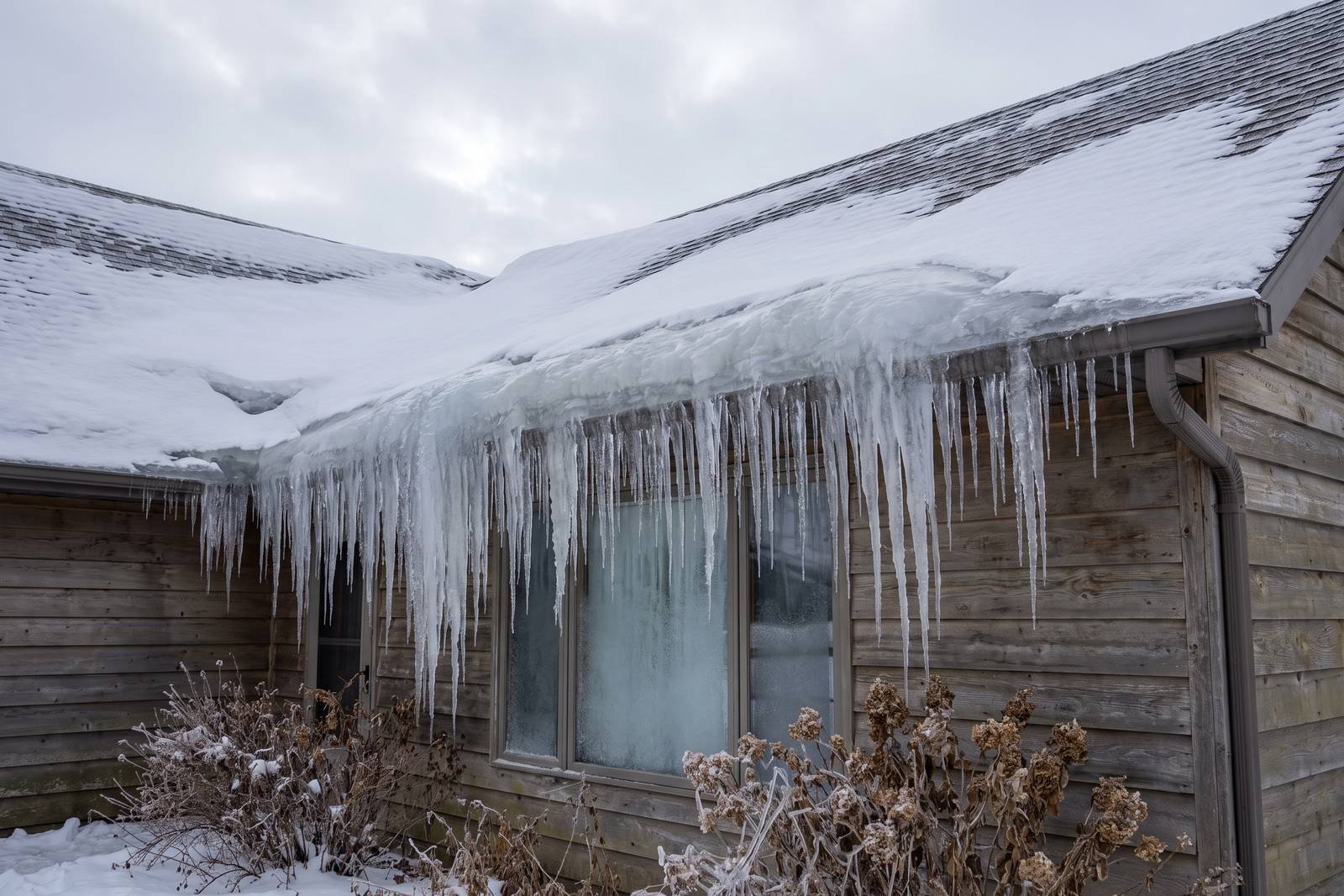
Two houses on the same Minot street can have the same age and the same shingles. One roof is fine. The other has rotten plywood at the eaves and a stained ceiling in the back bedroom. The difference is usually in the attic.
How attic airflow works: intake and exhaust
A vented attic is a simple system. Cold outside air comes in low, warms a little, and leaves high. That steady flow carries heat and moisture out before they can cause trouble.
- Intake is the air coming in. On most Minot homes it enters through soffit vents under the eaves.
- Exhaust is the air going out. Ridge vents, box vents near the peak and gable vents all do this job.
The two halves have to work together. A ridge vent with no working intake below it does very little. It can even pull warm air up out of the house through ceiling gaps, because the attic has to get its air from somewhere. Most problems we find are on the intake side, not the exhaust side.
Why balance matters more than vent count
More vents is not always better. Mixing different exhaust types on one roof, like a ridge vent plus a few box vents, can let one exhaust vent pull air from the other instead of from the soffits. The air then skips most of the attic. A balanced setup has clear intake along the eaves and one type of exhaust up high.
What the North Dakota code asks for
North Dakota adopted the 2024 International Residential Code as part of the State Building Code, effective January 1, 2026, and cities that enforce a building code use that state code. The roof ventilation rules sit in Section R806. Here is the short version.
| Rule | What it says | What it means at home |
|---|---|---|
| Minimum vent area | Net free vent area of 1/150 of the vented attic space | A 1,500 sq ft attic needs about 10 sq ft of open vent area |
| Reduced vent area | 1/300 is allowed when 40 to 50 percent of the vent area is up high and the rest is in the bottom third, plus a Class I or II vapor retarder on the warm side of the ceiling in Climate Zones 6, 7 and 8 | The same attic can drop to about 5 sq ft if the vents are balanced high and low |
| Upper vents | Located no more than 3 feet below the ridge, measured vertically | Exhaust has to be near the peak to count |
| Insulation clearance | At least a 1 inch space between insulation and roof sheathing at the vent | Insulation cannot be packed tight against the soffit |
| Screening | Vent openings protected from rain, snow, birds and rodents | Use proper vent screens, not open holes |
Net free area is the open space after screens and louvers, not the size of the vent cover. A vent that looks big can have much less real opening. You can read Section R806 in the 2024 IRC roof ventilation chapter from the International Code Council.
Blocked soffits: the problem we find most
From the ground, a soffit vent looks fine. From inside the attic, it is often buried. Here is what usually blocks intake on homes around Ward County:
- Blown-in insulation pushed right into the eave space with no baffle to hold it back
- Old solid soffit boards left in place when vented soffit panels were added over them
- Paint and dust filling the small holes in older perforated soffits
- Bird nests and wasp nests in the gaps behind the panels
- Interior walls or blocking at the top plate with no holes drilled for air
The fix for most of these is a baffle, also called a rafter vent. It is a channel that sits between the rafters at the eave and keeps a clear path from the soffit up into the attic, even when the insulation is deep. NDSU Extension engineers recommend baffles so insulation does not block soffit airflow, and the U.S. Department of Energy guide to durable attics notes that baffles also protect the insulation at the eaves.
Frost in the attic: the winter problem nobody sees
On a cold January morning in Minot, a lot of attics are white inside. The nails and the underside of the plywood are coated in frost. Most homeowners never know, because nobody climbs into the attic in January.
Here is how it happens. Warm, damp air from the house leaks into the attic through gaps around light fixtures, the attic hatch, plumbing stacks and wiring holes. That moisture hits the cold roof deck and freezes. On the first warm day it melts all at once. People call it attic rain. It drips onto the insulation, stains the ceiling, and soaks the plywood.
Common sources of attic moisture
- Bath fans that dump into the attic instead of outside
- Kitchen and dryer vents that come loose from their ducts
- Gaps around recessed lights, attic hatches and plumbing pipes
- Poor intake, so damp air sits instead of moving out
The Department of Energy calls exhaust fans vented into the attic a major source of moisture. Good ventilation helps carry moisture away, but sealing the leaks from below matters just as much. Ventilation and air sealing are a team.
How poor ventilation leads to ice dams
An ice dam starts with a warm roof. Heat from the attic melts the snow on the upper roof. The water runs down to the cold overhang and freezes. The ridge of ice grows, and the next meltwater backs up behind it and works under the shingles.
NDSU Extension puts it plainly: ice dams are a sign the house is leaking heat and does not have enough attic ventilation. Their engineers say the goal is a roof that stays near the outdoor temperature, with enough insulation and venting to get there. You can see their advice on checking your roof for ice dams.
With about 38 inches of snow in an average Minot winter, there is plenty on the roof to melt. If you already fight ice every year, read our guide to safe ice dam removal, then look at the attic.
What bad ventilation does to your roof over time
The damage from poor airflow is slow, which is why it gets missed. By the time you see it from inside the house, it has usually been going on for years.
| Where | What you see | What it means |
|---|---|---|
| Roof deck | Dark, stained or soft plywood near the eaves | Moisture has been sitting on the wood each winter |
| Nails | Rusty nail tips poking through the deck | Frost forms on the nails and melts over and over |
| Insulation | Matted, wet or flattened insulation | Attic rain or ice dam leaks are soaking it |
| Shingles | Curling or blistering, worst on the upper roof | The deck is running hot in summer |
| Eaves | Heavy icicles and ice ridges | Heat is escaping into the attic and melting snow |
| Ceiling | Brown water stains along outside walls | Water is getting past the roof or dripping from frost |
A roof that runs hot in summer and wet in winter will wear out sooner. If you are wondering whether yours is near the end, our post on how long a roof lasts covers the other signs.
Fixing ventilation on a Minot roof
During a roof replacement
A tear-off is the best time to get ventilation right. The deck is open, so we can cut in a proper ridge vent, check every soffit bay, and replace rotted plywood. Checking attic intake is part of our standard build on every roof replacement in Minot, along with ice and water shield past the interior wall line and synthetic underlayment over the full deck.
Without replacing the roof
- Install baffles at the eaves and pull insulation back from the soffits
- Swap solid soffit sections for vented panels
- Run bath fans to the outside with sealed ducts
- Seal gaps around lights, pipes, wiring and the attic hatch
- Top up insulation once the air leaks are sealed
On insulation, ENERGY STAR recommends about R49 to R60 in the attic for the coldest climate zones, which covers North Dakota. NDSU Extension gives a rough guide of about 15 inches of blown-in insulation. Add insulation only after the intake is clear, or you can bury the soffits all over again.
Checking your attic ventilation this winter
You can learn a lot from the ground and the attic hatch:
- After a fresh snow, compare your roof to a detached garage. Bare patches on the house roof mean heat is getting through.
- Look for big icicles along the eaves.
- On a cold morning, shine a flashlight into the attic. Look for frost on nails and the deck.
- Check that you can see daylight or baffles at the soffits.
- Find where the bath fan duct ends. It should go outside.
If you find frost, wet insulation or blocked soffits, have someone look before spring melt. Our free inspection takes about 45 minutes and you get a photo report the same day. You can request a free inspection online or call (380) 247-5157.
Want someone to actually look at it?
Free inspection anywhere in Ward County. Photo report the same day, and we will tell you if the roof is fine. Call (380) 247-5157 or request online.
Questions we get asked
How much attic ventilation does a North Dakota home need?
The 2024 International Residential Code, adopted by North Dakota, calls for net free vent area of 1/150 of the attic space. It drops to 1/300 when the vents are balanced between high and low and a vapor retarder is installed on the warm side of the ceiling in our climate zones. A balanced split of intake low and exhaust high is the goal.
Why is there frost in my attic in winter?
Warm, damp air from the house is leaking into the attic and freezing on the cold roof deck and nails. Common causes are bath fans vented into the attic and gaps around lights, pipes and the attic hatch. Poor intake ventilation makes it worse because the moist air sits instead of moving out.
Can poor attic ventilation cause ice dams?
Yes. A warm attic melts snow on the upper roof, and the water refreezes at the cold eaves. NDSU Extension says ice dams are a sign the house is leaking heat and does not have enough attic ventilation.
Should I add more roof vents to fix ice dams?
Not always. Most problems are blocked intake at the soffits or air leaks from the house, not a shortage of exhaust vents. Mixing exhaust types can even make airflow worse, so check the soffits and air sealing first.
Related services
If you need this done
Free Roof Inspection
A roof inspection should end with photos and a number, not a sales pitch. We walk the roof, check the attic fr...
See details →Commercial Roofing
Commercial roofing in Minot, ND means low-slope membranes carrying a 35 psf snow load and drains that have to ...
See details →Metal Roofing
Metal is the roof that makes the most sense in this climate and the least sense on a spreadsheet, which is why...
See details →Keep reading
More straight answers
How Long Does a Roof Last in North Dakota?
Manufacturers publish lifespans measured in a lab. Here is what each roofing material actually delivers on a house that sees 38 inches of snow and -40 degree cold snaps.
Read →CostsHow Much Does a New Roof Cost in North Dakota?
What a roof replacement actually costs in Minot and across North Dakota in 2026, and which line items are real versus which are padding.
Read →WinterIce Dam Removal and Prevention in North Dakota
An ice dam is an attic problem wearing a roof costume. Here is how to get the water stopped today and how to stop it happening again.
Read →MaterialsMetal Roof vs Shingles in a North Dakota Winter
The comparison most articles get wrong, because they are written for climates that never see 38 inches of snow or a -40 cold snap.
Read →MaterialsAre Class 4 Impact Resistant Shingles Worth It in Hail Country?
A Class 4 shingle costs about 15 to 25 percent more. In a hail state the insurance discount often covers it. Here is how to check whether it does for you.
Read →StormRoof Inspection After a Hail Storm: What to Do First
Most denied hail claims are denied on documentation, not on damage. Here is the order to do things in.
Read →StormHow to File a Hail Damage Roof Insurance Claim
The claim process, the two policy types that decide what you actually receive, and what to do when the adjuster's scope comes back short.
Read →Roof Life9 Signs You Need a New Roof, Not Another Repair
Some of these you can see from the driveway. The two that matter most are inside your attic and in your gutters.
Read →ProcessHow Long Does It Take to Replace a Roof?
Most homes are a one or two day job. Here is what happens on each of those days, and the five things that add time.
Read →RepairHow to Find a Roof Leak (Before It Costs You a Ceiling)
Water travels along rafters before it drops. The wet spot on your ceiling is almost never directly below the entry point.
Read →ProcessWhen Is the Best Time to Replace a Roof in North Dakota?
Late spring and early fall give you the best install. Here is the month-by-month reality in a climate that hits both 95 F and -40 F.
Read →HiringHow to Choose a Roofing Contractor
The questions that filter out bad contractors are all things you can verify. None of them are about who seems nicest at the door.
Read →StormActual Cash Value vs Replacement Cost on a Roof Claim
Two policies, same storm, same roof: one pays $18,000 and the other pays $7,000. The difference is one line on your declarations page.
Read →Get a free roof inspection this week
Photo report the same day. No obligation, and no pressure if the roof is fine.